---
title: Can PGT-A Tell Us an Embryo's Genetic Story?
description: Thinking about PGT-A testing during IVF? Learn what this genetic screening can and can't tell you about embryo health, mosaicism, and your odds.
image: https://news.flindersfertility.com.au/hubfs/genetic%20testing.jpg
---
SA's IVF Leader Since 1982
- [Contact Us](https://flindersfertility.com.au/contact-us)
- [tel:0881555333](tel:0881555333)**Phone** 08 8155 5333
- [Javascript:void(0);](Javascript:void(0);)
- [mailto:enquire@flindersfertility.com.au](mailto:enquire@flindersfertility.com.au)
-
-
[](https://flindersfertility.com.au/)
- [Why Choose Us](https://flindersfertility.com.au/why-choose-flinders-fertility/about-us)
- [About Us](https://flindersfertility.com.au/why-choose-flinders-fertility/about-us)
- [IVF Success Rates](https://flindersfertility.com.au/why-choose-flinders-fertility/success-rates)
- [Our Team](https://flindersfertility.com.au/why-choose-flinders-fertility/our-team)
- [Our Doctors](https://flindersfertility.com.au/our-doctors/our-doctors)
- [Our Doctors](https://flindersfertility.com.au/our-doctors/our-doctors)
- [Professor Neil Johnson](https://flindersfertility.com.au/our-doctors/professor-neil-johnson)
- [Associate Professor Vasant Shenoy](https://flindersfertility.com.au/our-doctors/associate-professor-vasant-shenoy)
- [Dr Toby Angstmann](https://flindersfertility.com.au/our-doctors/dr-toby-angstmann)
- [Dr V. Prasantha Gange](https://flindersfertility.com.au/our-doctors/dr-v-prasantha-gange)
- [Dr Paul Knight](https://flindersfertility.com.au/our-doctors/dr-paul-knight-2)
- [Dr Jay McGavigan](https://flindersfertility.com.au/our-doctors/dr-jay-mcgavigan)
- [Dr Jessica Floreani](https://flindersfertility.com.au/our-doctors/dr-jessica-floreani-2)
- [Dr Amy Gavin](https://flindersfertility.com.au/our-doctors/dr-amy-gavin)
- [Dr Kirsten Missen](https://flindersfertility.com.au/our-doctors/dr-kirsten-missen)
- [Book an Appointment](https://flindersfertility.com.au/our-doctors/book-an-appointment)
- [Patient Resources](https://flindersfertility.com.au/patient-resources/what-to-expect)
- [What to expect](https://flindersfertility.com.au/patient-resources/what-to-expect)
- [Preparing for Pregnancy](https://flindersfertility.com.au/patient-resources/preparing-for-pregnancy)
- [Am I suitable](https://flindersfertility.com.au/patient-resources/am-i-suitable-for-fertility-treatment)
- [Female Infertility](https://flindersfertility.com.au/patient-resources/causes-of-infertility)
- [Male Infertility](https://flindersfertility.com.au/patient-resources/male-infertility)
- [Subfertility vs Infertility](https://flindersfertility.com.au/patient-resources/subfertility-vs-infertility)
- [Fertility Guides](https://flindersfertility.com.au/patient-resources/fertilityguides)
- [Frequently Asked Questions](https://flindersfertility.com.au/patient-resources/frequently-asked-questions)
- [Medication Videos](https://flindersfertility.com.au/patient-resources/medication-videos)
- [Fertility News](https://news.flindersfertility.com.au)
- [Treatments & Services](https://flindersfertility.com.au/treatments-and-services)
- [How to start fertility investigations](https://flindersfertility.com.au/treatments-and-services/how-to-get-started)
- [Metabolic Reset Program](https://flindersfertility.com.au/treatments-and-services/metabolic-reset)
- [Egg Freezing](https://flindersfertility.com.au/treatments-and-services/egg-freezing)
- [Reproductive Carrier Screening](https://flindersfertility.com.au/treatments-and-services/reproductive-carrier-screening-2)
- [IVF and ICSI](https://flindersfertility.com.au/treatments-and-services/ivf-and-icsi)
- [LGBTQI+ fertility management](https://flindersfertility.com.au/treatments-and-services/lgbtqia)
- [Ovulation Induction (OI)](https://flindersfertility.com.au/treatments-and-services/ovulation-induction-oi)
- [IUI - assisted insemination](https://flindersfertility.com.au/treatments-and-services/iui-assisted-insemination)
- [Frozen Embryo Transfer](https://flindersfertility.com.au/treatments-and-services/frozen-embryo-transfer)
- [Advanced Genetic Testing PGT-A](https://flindersfertility.com.au/treatments-and-services/genetic-testing)
- [Surgical sperm retrieval](https://flindersfertility.com.au/treatments-and-services/surgical-sperm-retrieval)
- [Donor Program](https://flindersfertility.com.au/treatments-and-services/donor-program)
- [Endocrine Disorders](https://flindersfertility.com.au/treatments-and-services/endocrine-disorders)
- [Fertility Preservation](https://flindersfertility.com.au/treatments-and-services/fertility-preservation)
- [Counselling & Support](https://flindersfertility.com.au/treatments-and-services/counselling-support)
- [Recurrent Pregnancy Loss Clinic](https://flindersfertility.com.au/treatments-and-services/recurrent-pregnancy-loss-clinic)
- [Recurrent Implantation Failure Clinic](https://flindersfertility.com.au/treatments-and-services/recurrent-implantation-failure-clinic)
- [Specialist Gynaecology Surgery](https://flindersfertility.com.au/treatments-and-services/specialist-gynaecological-surgery)
- [Fees](https://flindersfertility.com.au/fees/our-fees)
- [Fertility Treatment Costs](https://flindersfertility.com.au/fees/our-fees)
- [Financial Assistance](https://flindersfertility.com.au/fees/financial-assistance)
- [Concession Card Holders](https://flindersfertility.com.au/fees/price-list-for-concession-card-holders)
- [GP Resources](https://flindersfertility.com.au/gp-resources)
- [What to include in referrals](https://flindersfertility.com.au/gp-resources/for-referrers)
- [Guidelines for fertility investigations](https://flindersfertility.com.au/gp-resources/guidelines-for-fertility-investigations)
- [Patient flyers](https://flindersfertility.com.au/gp-resources/patient-flyers)
x
# Can PGT-A Tell Us an Embryo's Genetic Story?
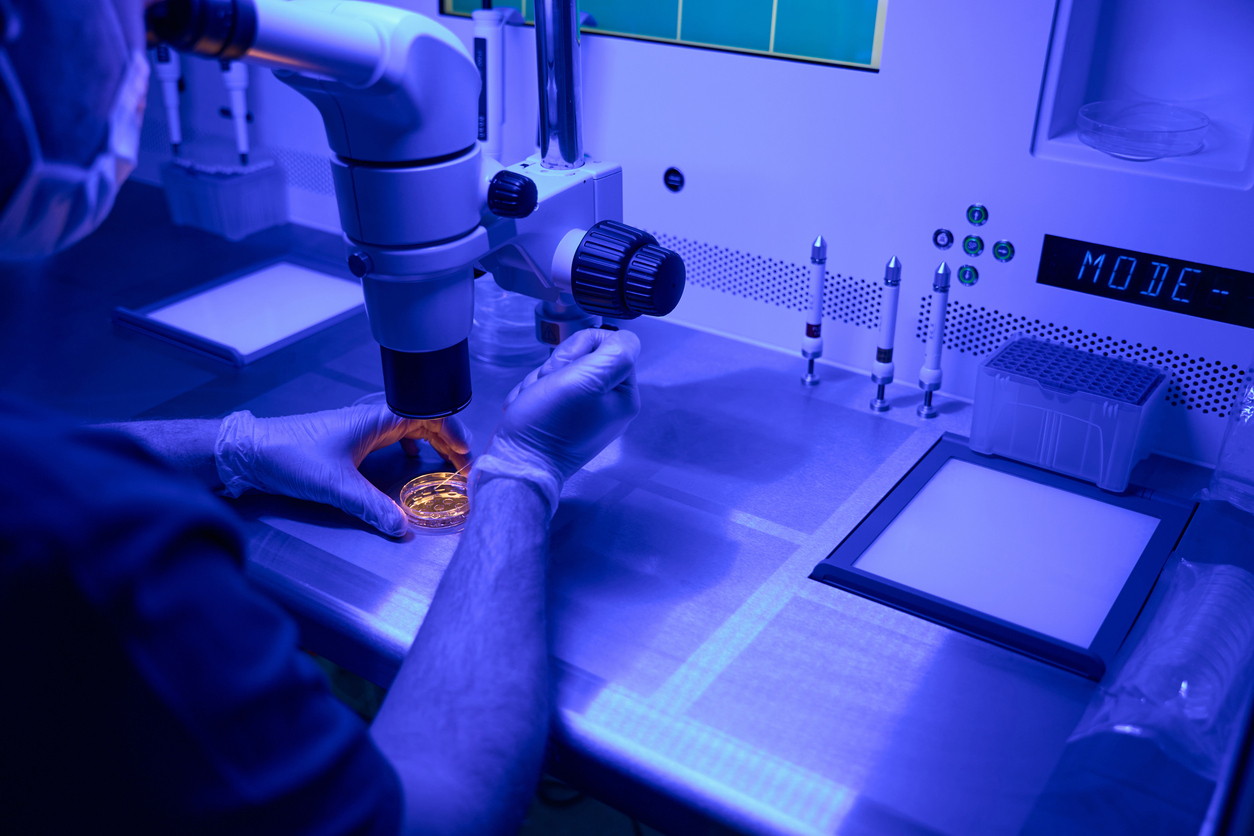
If you're going through IVF, you may have heard about PGT-A, a genetic test that looks at the chromosomes in an embryo before it's transferred. It sounds like a straightforward way to pick the “best” embryo. But the science behind it is much more nuanced than a simple pass-or-fail result, and understanding that nuance can help you have a more informed conversation with your fertility specialist at Flinders Fertility.
## What PGT-A is actually testing:
Our cells normally contain 46 chromosomes: 23 from each parent. Sometimes, during the formation of eggs or sperm, or in the early days of embryo development, a chromosome can go missing or an extra copy can appear. This is called aneuploidy, and it changes the balance within a developing embryo. It's a common cause of miscarriage and, less often, of conditions such as Down's syndrome.
PGT-A (pre-implantation genetic testing for aneuploidy) was developed to screen embryos for these chromosome differences during IVF, so clinics can decide which embryo might have the best chance of a healthy pregnancy.
## Why a few cells don't always tell the whole story:
The most common form of PGT-A biopsies about five cells from an embryo on day five, when it has grown into a structure called a blastocyst. At this stage, the blastocyst has around 100 cells in total: an outer layer that will go on to form the placenta, and an inner group of cells that will become the baby.
The biopsy procedure only samples the outer, placenta-forming layer, never the cells that become the foetus. That matters for a few reasons:
- **Errors can happen after fertilisation, not just before it.** If a chromosome error occurs early, before the egg is fertilised, the whole embryo will be affected. But if it happens during the first few cell divisions of the embryo itself, only some cells will carry the error, a pattern called mosaicism. This means a five-cell sample might not reflect the other 95 or so cells in the embryo.
- **Cells that divide near each other tend to stay near each other.** So a biopsy might accidentally sample a cluster of cells that are more (or less) affected than the whole embryo.
- **Placental cells and foetal cells behave differently.** Research has shown that the placenta can tolerate chromosome abnormalities much better than the foetus can. There are documented cases of healthy babies being born from pregnancies where the placenta itself had abnormal chromosome numbers. This means an “abnormal” placental biopsy doesn't automatically mean an abnormal baby.
## What the research shows about mosaic results:
When a PGT-A biopsy comes back as low-to-moderate mosaic (roughly under 50% of tested cells showing an abnormality), studies looking at the rest of the embryo have found the abnormality actually extends further in only about 1 in 100 cases. Embryos with these results have gone on to be transferred and result in the birth of babies with completely normal chromosomes.
For biopsies showing higher levels of mosaicism (over 50%), clinics are understandably more cautious about transferring these embryos. That said, some embryos initially labelled as fully abnormal have later turned out, on closer analysis, to actually be mosaic rather than uniformly affected. This is part of why many specialists now believe patients, particularly those with few or no other embryos available, should be given the full picture and the choice, rather than having these embryos automatically excluded.
PGT-A involves removing cells from an embryo outside the incubator. This is a procedure with a well-established safety record for achieving live births, though long-term studies on child development following biopsy are still relatively limited.
## PGT-A testing is quite different to PGT-SR and PGT-M:
It's also worth knowing that PGT-A is different from PGT-M and PGT-SR, which test for specific inherited genetic conditions or structural chromosome rearrangements. Those tests are considered highly accurate diagnostic tools. PGT-A, by contrast, is probabilistic: it estimates likelihood rather than delivering a certain diagnosis. In the UK, the fertility regulator (the HFEA) notes that PGT-A may reduce miscarriage risk for some patients but could also reduce the overall chance of a live birth from a treatment cycle, depending on individual circumstances.
## Key takeaway:
PGT-A can be a genuinely useful tool, but its results are best understood as one piece of information rather than a final verdict on an embryo's potential. A “mosaic” or even an “abnormal” result doesn't automatically rule out a healthy pregnancy, and the right approach can differ from person to person.
*If you've had, or are considering, PGT-A as part of your IVF journey, your Flinders Fertility specialist can walk you through what your specific results mean and help you weigh your options with confidence.*
- [Why Choose Us](https://flindersfertility.com.au/why-choose-flinders-fertility)
- [Our Doctors](https://flindersfertility.com.au/our-doctors)
- [Patient Resources](https://flindersfertility.com.au/patient-resources)
- [Treatments & Services](https://flindersfertility.com.au/treatments-and-services)
- [Fertility Treatment Costs](https://flindersfertility.com.au/fees/our-fees)
- [Book Now](https://flindersfertility.com.au/contact-us)
- [Careers](https://flindersfertility.com.au/careers)
- [Facebook](https://www.facebook.com/flindersfertility/)
- [Instagram](https://www.instagram.com/flindersfertility/)
Kaurna Country, 24 Gordon St, Glenelg SA 5045
Phone 08 8155 5333
© 2020 Flinders Reproductive Medicine Pty Ltd trading as Flinders Fertility
- [Privacy Policy](https://flindersfertility.com.au/privacy-policy)
- [Patients rights and responsibilities](https://flindersfertility.com.au/patients-rights-and-responsibilities)
- [Terms & Conditions](https://flindersfertility.com.au/terms-conditions)
*We acknowledge and pay our respects to the Kaurna people, the traditional custodians of the land where we work*